
In today’s cashless economy, accepting digital payments is no longer optional—it’s expected. But while tapping a card or mobile wallet feels seamless for guests, behind the scenes, operators are absorbing a growing layer of merchant fees and pricing complexities that can quietly eat into margins.
Most businesses pay between 3–3.5% in effective processing fees, with some exceeding 4% depending on card mix and hidden costs.
If you’re running a family entertainment centre (FEC), cinema, or eatertainment venue, this isn’t just a finance issue—it’s a profitability and operational strategy issue. This blog breaks down the real costs of payments, what most operators overlook, and how to optimise your setup to protect revenue and drive smarter growth.
Check out this video from Embed’s Payment Gateway Guru on how to select the right payment partner for your FEC.
What are Merchant Fees?
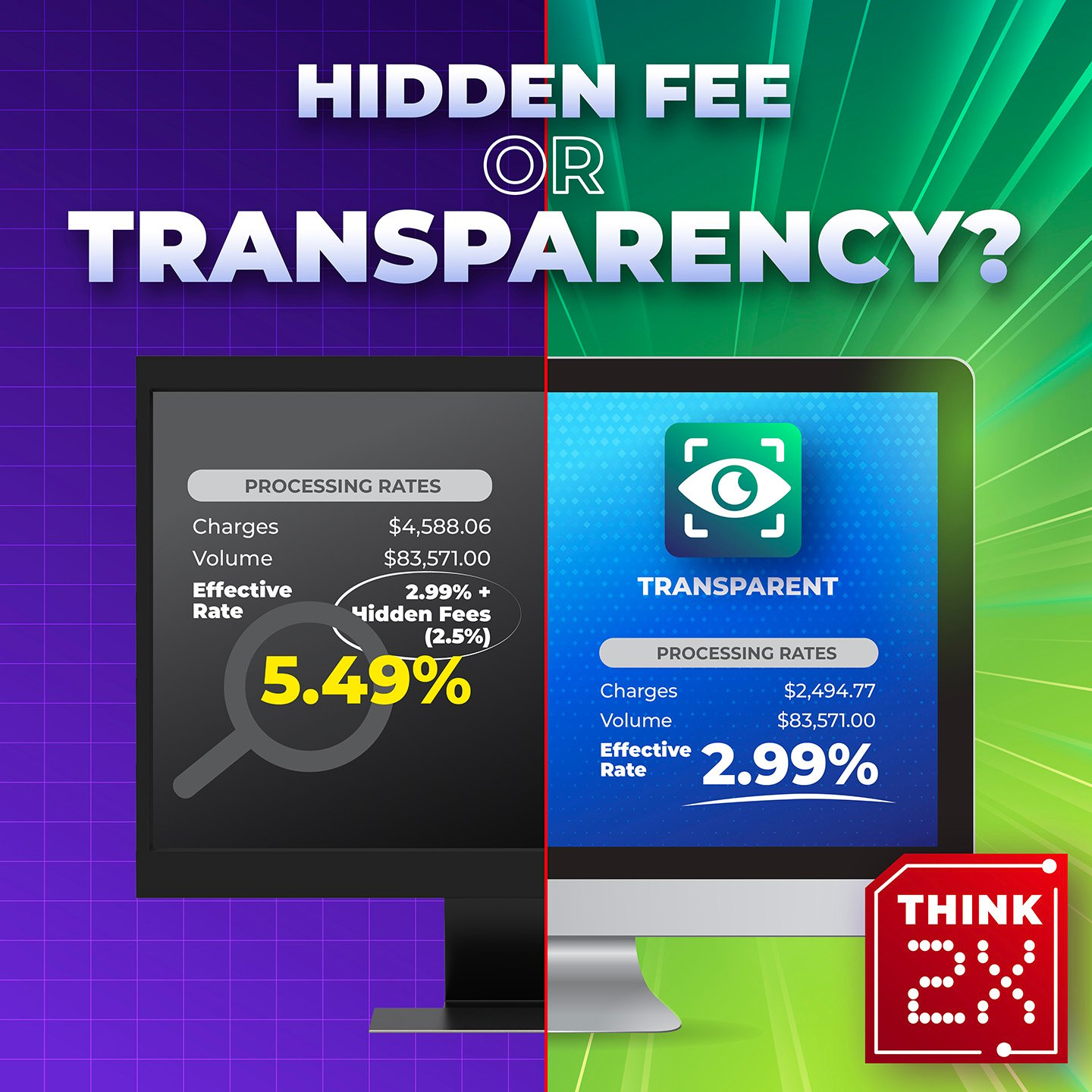
Every digital transaction comes at a cost. Merchant fees are the charges businesses pay to process card or digital payments.
These typically include:
- Interchange fees (paid to issuing banks)
- Payment processor fees
- Authorisation and transaction fees
- Monthly or service fees
- Maintenance fees
- Review trackers fees
- Statement fees
- Compliance fees
On paper, these range from 1.5% to 4% per transaction. But in high-volume environments like arcades or FECs, this quickly compounds into thousands of dollars in lost margin every month. This is how they add up fast over time.
What are Convenience Fees?
Ever shopped at an establishment, grabbed your credit card to pay, then you're asked to add a couple of bucks for your chosen mode of payment? To offset merchant fees, some operators introduce convenience fees—a surcharge passed to customers for using digital payments.
Sounds simple, — but here's the catch:
-
Guests may perceive it as a penalty
- Card networks like Visa have strict rules around how these fees are applied. Merchants must not add convenience fees on top of the standard price.
- It can negatively impact guest experience and spend. In fact, consumers are significantly more likely to view brands negatively when fees are added unexpectedly. In a 2020 American Express survey, it was found that 86% of customers stop patronising businesses that charge convenience fees or surcharges. 76% think it’s unfair to pay extra for their choice of mode of payment. Consumers resent such establishments for passing the added costs to them, on top of what they also must pay to use credit cards.
- In entertainment venues, where experience is everything, convenience fees can sometimes hurt more than they help.
Unfortunately, due to rising operational costs, international tariffs, and other factors, some FEC operators resort to dual pricing.
What is Dual Pricing?
Dual pricing might sound like a clever workaround: One price is displayed for cash payments and a slightly higher price is shown for card payments. Instead of adding a fee at checkout, the pricing difference is built into the displayed price.
Dual pricing could be presented as putting the burden on your guests, at no cost to you. This makes it seem like your guests get a cash discount—and that you’re getting back around 3% of your revenue.
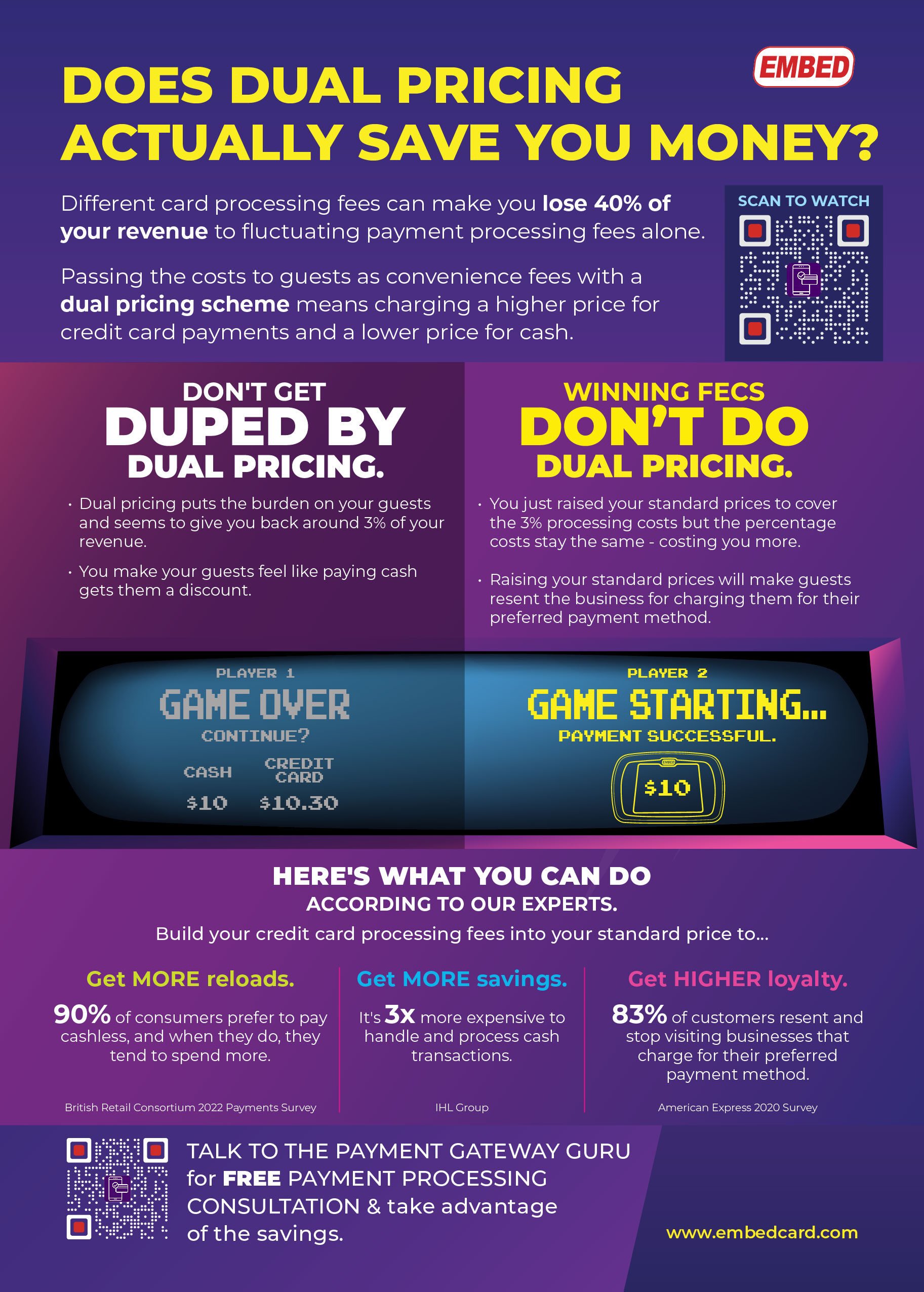
The truth is dual pricing is not really optimal for your business. You just raised your standard prices to account for the 3% card processing costs in order to drive customers to pay with cash. But the truth is, all industry data shows that the cost of accepting cash is at least 3x more than the cost of accepting card or digital payments. It’s costing you more!
What to Do Instead
The way to cover the card processing costs is to build your credit card processing fees into your standard price. This way, you get:
-
More game card reloads. Cashless is still the consumer preference highly because of its ease of use and convenience.
-
Higher savings. It’s 3x more expensive to handle and process cash transactions versus digital.
-
More loyalty. Since you don’t put added cost to your customers, you get returning guests that can pay with their preferred method without feeling that they are overspending to have a good time.
How much are hidden fees actually costing you?
Enter your monthly card volume and current rate to see the real number.
No commitment. Embed's Payment Gateway Guru will run a complimentary rate audit.
The Truth: It’s a Numbers Game, but You Don’t Have to Play.
Merchant fees, convenience fees, and dual pricing are often treated as backend decisions. But in reality, they directly impact the guest experience, operational efficiency, and profitability.
While it seems daunting to start doing a deep dive on your financials to uncover hidden costs and how much you’re losing when accepting card payments, Embed’s resident Payment Gateway Guru can provide complimentary consultation and rate reviews to show you how much you can save simply by changing your payment provider.
The operators who win are the ones who:
-
Understand their true payment costs
-
Reduce friction across the guest journey
-
Turn payments into a strategic advantage
Learn more about why payment gateway integration is an important pillar of success for your FEC to automate your end-of-day reconciliation to save time, eliminate manual labour, and reduce costs.



.svg)
.svg)
.svg)
.svg)
.svg)